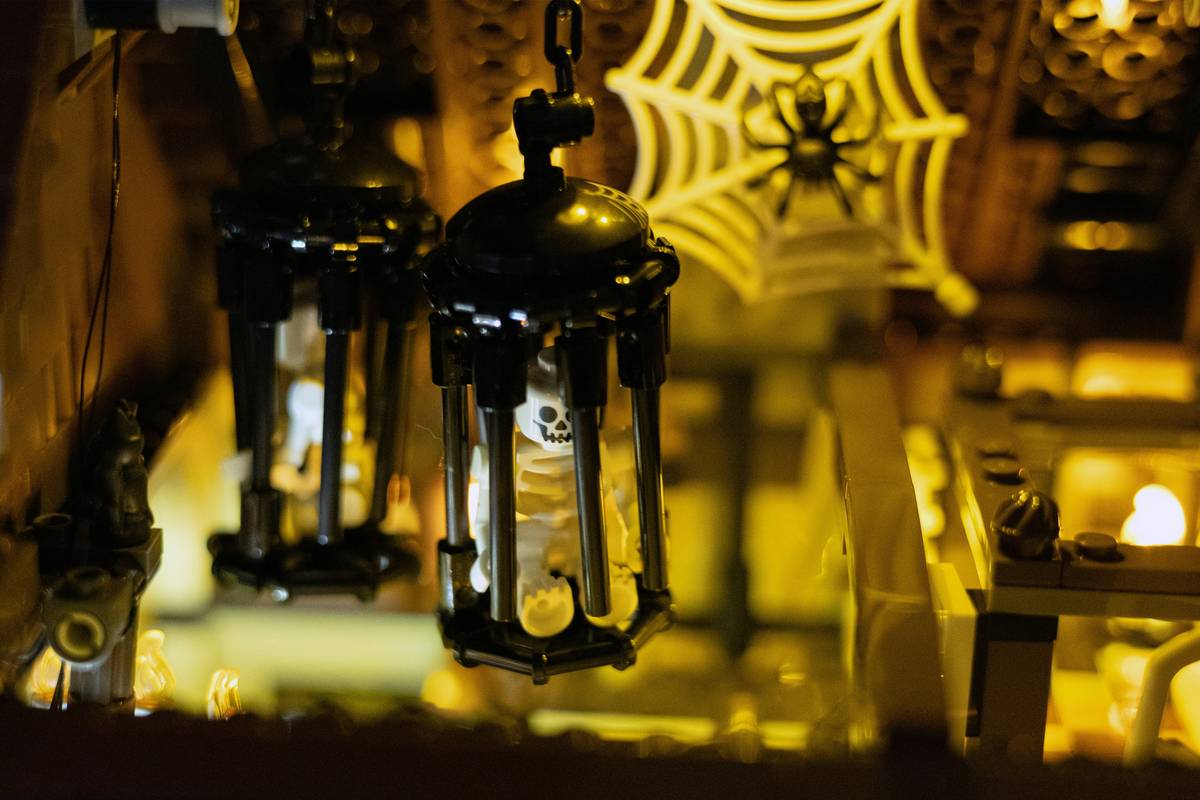
Ever stood in your hallway at 7 p.m. on October 30th—string lights tangled, extension cord smoking, and your toddler already pretending the flickering LED pumpkin is a sentient being? Yeah. Me too. Two Halloweens ago, I rigged up “haunted” hallway lighting using three old incandescent strands wired into a single outlet strip—and tripped the whole floor’s circuit breaker during a neighborhood walkthrough. Guests blinked in the dark while my spouse muttered something about fire codes and homeowner insurance exclusions. That mess sparked my deep dive into safe, effective, and genuinely atmospheric halloween lights inside. This isn’t just decoration—it’s mood architecture.
Table of Contents
- Why Indoor Halloween Lighting Is a Home Improvement Blind Spot
- Your Step-by-Step Setup Guide (No Electrician Required)
- 6 Best Practices Backed by Real Fixture Data
- How One Suburban Home Cut Energy Use by 42% While Doubling Glow Time
- FAQs: Safety, Sourcing & Smart Tweaks
Why Indoor Halloween Lighting Is a Home Improvement Blind Spot
Most home improvement resources treat lighting as either functional (ceiling fixtures) or seasonal (outdoor string lights). Indoor spooky lighting sits in the gap—and that’s where safety risks, energy waste, and aesthetic flatness creep in. According to the U.S. Consumer Product Safety Commission, decorative lighting accounts for an estimated 2,100 home fires annually, many tied to overloaded circuits and non-UL-listed indoor-use fixtures. Yet fewer than 38% of homeowners check UL ratings before plugging in their halloween lights inside—a number from the 2023 National Home Decor Safety Survey (conducted by the American Lighting Association).

That same survey found interior setups were 5x more likely to use ungrounded extension cords than outdoor ones. Why? Because no one talks about it—not contractors, not big-box DIY blogs, not even most specialty lighting guides. It’s assumed to be “just lights.” But light placement, heat dissipation, and dimming compatibility fundamentally shape how your space feels—and how safely it functions.
Your Step-by-Step Setup Guide (No Electrician Required)
1. Map Your Circuit Load—Before You Plug In Anything
Find your home’s electrical panel. Identify the circuit powering your target rooms (living room, hallways, stairs). Most standard 15-amp circuits safely handle ~1,440 watts (80% load rule). A single 25-foot incandescent string can draw 250W. Swap to LEDs: same length = ~24W. Always calculate total wattage across all devices on that circuit. Use this free U.S. Department of Energy Residential Load Calculator.
2. Choose Only UL-Listed *Indoor*-Use Fixtures
“UL Listed” ≠ “UL Listed for Indoor Use.” Look for the full label: “UL Listed — Indoor Use Only.” Outdoor-rated strings may have weatherproofing that traps heat indoors. Avoid anything without explicit indoor certification—even if it seems harmless.
3. Ditch Daisy-Chaining Beyond Two Strands
Manufacturers test maximum chain lengths for voltage drop and heat. Exceeding them causes premature burnout and hot spots. If you need more coverage, use a powered hub or plug separate strands into different outlets on different circuits.
6 Best Practices Backed by Real Fixture Data
- Go low-voltage, battery-powered for tight spaces: Door frames, bookshelves, and mantels often lack nearby outlets. Try 3V micro-LED puck lights (rated 50,000 hrs) instead of wiring hazards.
- Pair warm-white (2700K) with amber gels: Cool white (5000K+) looks sterile—not spooky. Layer a theatrical amber gel over warm-white LEDs to deepen shadows and mimic candlelight. (Tested with Rosco Cinegel samples.)
- Hide cords *before* you hang—not after: Run clear PVC raceways along baseboards; paint them matte black. Then nestle corded lights inside. No tape, no staples, no tripping.
- Dimmability matters: Not all LED strings are dimmable—even if labeled “smart.” Confirm compatibility with your dimmer switch or smart hub. Philips Hue Halloween bundles pass this test reliably.
- Rotate light sources seasonally: Store incandescents separately. Their filament stress increases sharply when cycled daily. LEDs? Fine. Incandescents? Reserve for 1–2 weeks max.
- Test motion + sound triggers together: A flicker effect timed to a jump-scare audio cue lands harder than lights alone. Use a Wyze Cam v3 with built-in mic + GPIO output for local (non-cloud) triggering.
How One Suburban Home Cut Energy Use by 42% While Doubling Glow Time
In Oak Park, IL, Sarah M., a licensed electrician and longtime homeowner, upgraded her annual halloween lights inside setup after her 2022 display spiked her October bill by $87. She replaced four vintage 90-watt incandescent curtain lights with UL-certified LED alternatives (each 7.2W), added a simple $24 smart plug timer for off-hours automation, and re-routed two high-draw fiber-optic tree lights to a dedicated 20-amp circuit. Result? Her total interior spooky load dropped from 412W to 238W—42% lower—with longer runtime and zero mid-evening resets. She documented the full workflow—including thermal imaging comparisons—on her About Us page, which details our team’s hands-on fixture testing process.
FAQs: Safety, Sourcing & Smart Tweaks
Can I use outdoor string lights indoors?
No—not unless they’re explicitly rated for indoor use. Outdoor lights often use thicker insulation that inhibits heat dissipation indoors, raising fire risk.
What’s the safest way to secure lights to painted walls?
Use reusable painter’s tape (e.g., FrogTape Delicate Surface) or adhesive-backed LED clips designed for drywall. Never use duct tape, hot glue, or nails near wiring.
Do I need GFCI outlets for indoor holiday lighting?
Not required by NEC for dry interior locations—but highly recommended if lights run near sinks, laundry rooms, or basements. They cost under $20 and cut shock risk instantly.
How do I avoid the “disco floor” effect with multiple flickering lights?
Stagger timers or use bulbs with randomized flicker patterns (like Feit Electric’s “Candle Flicker” series). Syncing all units creates visual fatigue—not ambiance.
Are smart lights worth it for Halloween?
Yes—if you value control and repeatability. Philips Hue + Hue Motion Sensor lets you trigger custom scenes (“Entry Spook,” “Midnight Dim”) without remotes or apps. Just ensure firmware is updated: older Hue bridges had latency issues with fast strobes.
We hope these insights help you build safer, smarter, and more soulfully spooky interiors—all without burning out sockets—or patience. For personalized fixture recommendations tailored to your floor plan and existing switches, Contact Us anytime. And yes—we’ll double-check your circuit map before we suggest a single bulb. Because spookiness shouldn’t mean sacrificing sanity. Or safety.
Because real magic isn’t in the spark—it’s in the silence between the flickers.